Tidal pools in False Bay

Click here to see the whole map
False Bay lies between Cape Point and Cape Hangklip, from Simonstown to Pringle Bay. Swimmers typically cross False Bay between Rooi Els on the eastern shore and Miller's Point (near Simon's Town) on the western shore, which is a distance of approximately 33–34 kilometres.
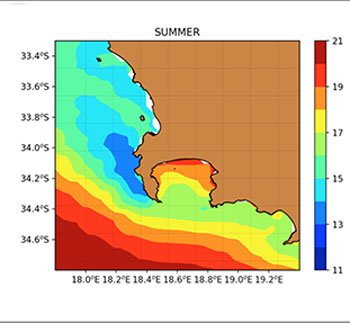
The Agulhas Current, which flows south-westerly along the Cape Coastline, brings warm tropical waters into False Bay - while the cold Benguela current pushes ant-Arctic water northwards along the Atlantic Coast.
The eastern and western shores of the bay are very rocky and even mountainous; in places, large cliffs plunge into the water. The northern coastline becomes relatively low and sandy.
False Bay is known for the powerful South Easterly winds that blow across the Bay during the summer months, driving swimmers to brave the cold but sheltered waters of the Atlantic Coast beaches and tidal pools.
The seal colonies in the bay attract Great White Sharks and Orcas, who sometimes attack swimmers and surfers.
There are 11 tidal pools along the shores of False Bay, from Cape Point to Koeëlbaai. In 1939, the Cape of Good Hope Nature Reserve was formally established to protect the land from commercial resort development.
The biggest town in False Bay is Muizenberg, which was originally established by the Dutch East India Company as a cattle post and signal station in 1743.
The railway from Cape Town was extended to Muizenberg in 1882. It turned a settlement of "shacks and farmhouses" into an accessible seaside destination for Cape Town residents. It also became a place for holiday homes for the rich after the discovery of gold in the Witwatersrand in 1886, when wealthy mining magnates began building palatial holiday homes in Muizenberg. Cecil John Rhodes bought a cottage here in 1899 for his health, famously dying there in 1902. Other famous residents were Sammy Marks, Sir Abe Bailey, the Oppenheimers, and Sir Herbert Baker, who all had holiday cottages there. Famous figures like Rudyard Kipling and Agatha Christie (who learned to surf there in 1922) were notable visitors.

15. Buffels Bay Tidal Pool
By the early 1800s, the largest tract of land in the area was the Buffelsfontein farm, which covered the southernmost part of the promontory. The Buffelsbaai (or Buffels Bay) tidal pool within the Cape Point section of Table Mountain National Park was built in the 1960s. The pool was part of a larger southward expansion of tidal pools along the Cape Peninsula that began in the late 19th century.


16. Bordjesdrift Tidal Pool
The Bordjiesrif Tidal Pool was built in the 1960s. Like many man-made tidal pools along the South African coast, it was constructed to provide a safe, protected swimming environment for children and the elderly, shielding them from strong surf, currents, and sharks.

17. Miller's Point Tidal Pool
Miller's Point got its name when the land was sold to Edmund Miller in 1825, who developed it as a whaling station. After it was used as a holiday home by the Molterno family, it was donated to the government and became a part of the national park. The tidal pool was built in the 1960's.
Miller's Point is also known as a landing point for swimmers who cross False Bay from Rooi Els, which is a distance of about 33km.


18. Shelley Point Tidal Pool
Many early pools in the area started as private, sometimes "illegal" ventures by residents who used rocks and cement to engineer safe swimming holes protected from the open ocean's currents and the Cape's notorious "South Easter" winds.
Best of all on this stretch of coast is the almost-forgotten, which is accessed by walking the dirt road for about 200m beyond the parking lot behind Glencairn station. In truth, the Shelley Point pool is badly dilapidated nowadays, with several sections of its main wall having collapsed. Whenever I swim there, I feel as though I am swimming in a ruin. It’s best to swim the short distance to the main wall and turn your back on it, looking back at the beach from which you’ve just come. There’s a ledge of rock and pebbles at the base of the wall and, sooner or later, you’ll be bombed by a breaker. It’s cold, exhilarating fun to squint through the spray in the bright, precious light. https://www.wantedonline.co.za/travel/south-africa/2019-11-21-still-waters-run-deep-dive-into-the-cool-world-of-wild-swimming/


19. Glen Cairn Tidal Pool
The Glencairn Tidal Pool in Cape Town was built in the early 1900s. The pool has been refurbished and restored over the years to maintain it as a family-friendly swimming spot.


20. Woolley's Tidal Pool
Woolley's Tidal Pool in Kalk Bay was named after William Woolley, who passed away in 1913. "My wife's great-grandfather was William Woolley. He lived in a house called 'Wayside' and also owned one called Step-aside. Both are just near Woolley's pool. There was a natural rock pool opposite their house. It was turned into a seawater swimming pool by the erection of a cement wall across the rocks at one end. It was done by the city council at Woolley's suggestion and so they named it after him." https://www.facebook.com/FishHoekBeach/posts/history-of-woolleys-pool-the-tidal-pool-between-clovelly-and-kalk-bay-my-wifes-g/1233620716721267/


21. By The Sea Villa
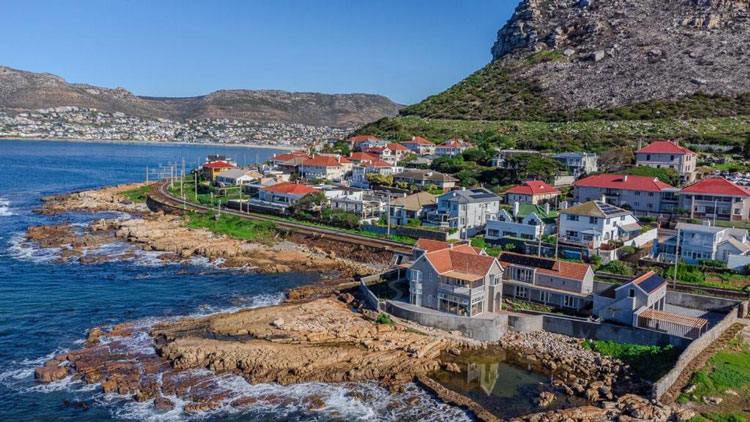
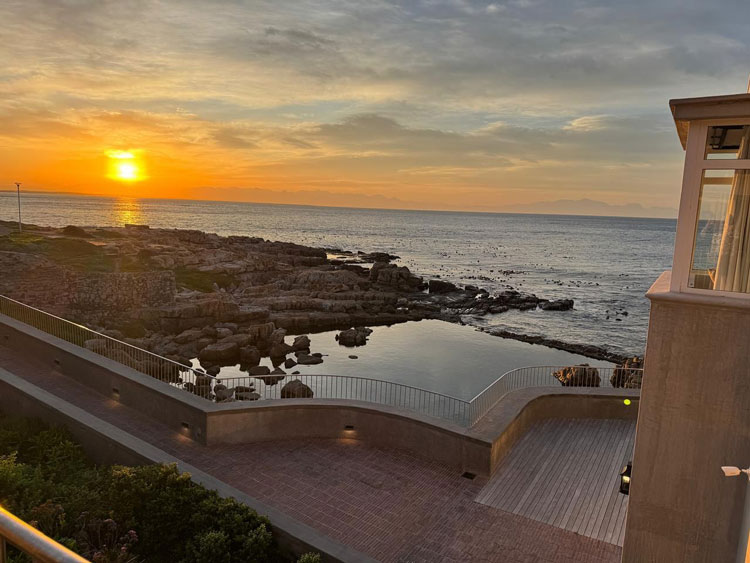
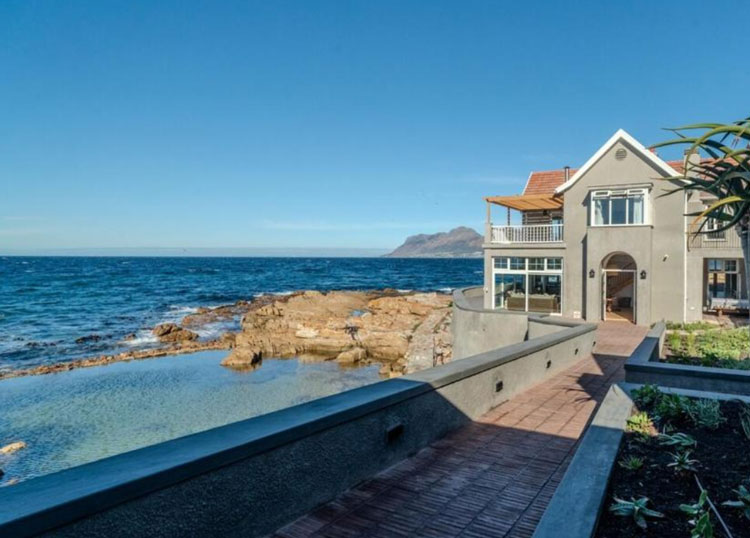
The tidal pool seems to belong to the house, although the public has access to the seashore up to the high-water mark. It seems likely that the house owner built the pool, reflecting a tendency for tidal pools to be unofficial structures.
22. Kalk Bay Tidal Pools
A series of pools were built near the station, including Bishop’s Pool and the square Kalk Bay Pool (1922). The Pavilion was built in the 1950s, when the building was used as a bathing pavilion, and once hosted swimming lessons and galas for local schools. The building now houses the Brass Bell Restaurant.


23. Dalebrook Tidal Pool
First formal wall built in 1903; pool augmented in 1907 and 1914. The first formal wall was reportedly built as a private undertaking by Mr F.B. Steer of Douglas Cottage. In 1907, the pool was officially commissioned by the Kalk Bay Municipality and has remained largely unchanged in its layout since then. Initially quite narrow, the pool underwent a significant extension during the 1960s to reach its current size. The pool is unique for having large natural boulders in the middle that serve as resting points for swimmers. It is accessed via a subway tunnel under the railway line.
Ebrahim says that he first came to swim at Dalebrook with his father when he was a child. Now 42 and a father of four, he brings his own children.
“They basically learnt to swim in this pool,” he says. “The waves are not so harsh. This is more relaxing”.
Sometimes Ebrahim snorkels at the pool. He says he has seen octopus and crab, and found coins and rings. He says that he feels connected to the pool – ”joined at the hip”.


24. St James Tidal Pool
In the village of St James, the homes date back to the days when the Cape was still a colony of the British Empire, built from limestone, plaster and stone, with traditional thatched roofs. St James Beach is well known for its colourful Victorian-style bathing boxes, which first appeared at St James in the 1890s. The concrete tidal bathing pool was commissioned in 1911, during an era which saw a boom in coastal development following the arrival of the railway line in 1883, transforming St James into an affluent seaside resort. Its name derives from the early St James Catholic Church, built circa 1880.


25. Strandfontein
The Strandfontein Tidal Pool is renowned as the largest tidal swimming pool in the Southern Hemisphere. Located on the False Bay coastline in Cape Town, it is a key feature of the Blue Flag-awarded Strandfontein Beach.
The Strandfontein Pavilion Refurbishment project is underway, with the first phase of construction expected to start in February 2026.
There is an active local surf-lifesaving club.


26. Monwabisi Tidal Pool
The Monwabisi Beach resort was built in 1986 as a recreational facility for African and coloured residents of Khayelitsha and Mitchells Plain.
The tidal pool, pavilion and public amenities provided a space for safe swimming and picnicking, while the beach itself remained dangerous for ocean bathing. The Monwabisi Lifesaving Club was established in 1987 to provide beach safety for bathers. In the early 1990s, in an attempt to reduce the tidal pool’s exposure to wave action and backwash, a rock breakwater was built. While seemingly creating a safer beach, the opposite occurred, resulting in rip currents generated by the longitudinal drift that have led to numerous drownings.
The first thing one sees at Monwabisi beach are the dilapidated buildings that used to entertain patrons and the sand that has covered the concrete tables and chairs where people used to feast.
Walking around the promenade it is covered by sand and the plank stairway to the water is broken, even a sign meant to warn swimmers of rip currents is broken.
2022


27. Die Strand
The shallow-shelving coastline here is caused by the 130 km/h strong south-easterly wind that can blow continuously for two weeks during the summer months. The shallow tidal pool is located along the 5km sandy beach known as Melkbaai.

28. Harmony Park Tidal Pool
The Harmony Park Resort and its tidal pool, built in 1991, are owned and maintained by the local municipality. The pool is one of the largest in Cape Town and features a one-of-a-kind design with islands, seawater fountains, and wave splitters along the sea wall. It was designed by The Planning Partnership and Interplan Architects, and built between 1989 and 1992.
Historically, the resort was specifically designed for "Coloured" recreation during the desegregation of South African beaches in 1989. It was strategically positioned to act as a "buffer" between the white-only beaches of Strand. While it is a multi-cultural space today, its legacy as a primary recreational site for the Coloured community continues to be reflected in its high weekend attendance and long-standing family traditions.


29. Gordons Bay Tidal Pool


30. Kogelbaai Tidal Pool
The Kogel Bay (or Koeëlbaai, in Afrikaans) Tidal Pool is (or was) a popular spot for students from nearby Stellenbosch University. It remains a staple of the university's "beach culture" due to its proximity (roughly a 40-minute drive) and its reputation as a premier surfing and social spot.
Students and visitors should be aware that the City of Cape Town has identified Kogel Bay as a "hotspot for water emergencies" due to strong riptides. It is highly recommended to only swim when lifeguards are on duty. On April 19, 2012, 20-year-old bodyboarder David Lilienfeld was killed by a Great White Shark at Kogel Bay (specifically near Dappat se Gat) in the Western Cape, South Africa. The 4–5 meter shark attacked him twice, severing his leg. Following the attack, up to six sharks were spotted in the area.

